We are pleased to introduce five different eco-friendly products (pelletized wool, wool “sponges”, wool dryer balls, felted goat’s milk soaps, and all-natural sugar-free (and mostly organic) small-batch gourmet jams and salsas).
The wool products are made using wool that would otherwise be considered as “trash” from our very own sheep. (Jams and salsas are mainly made using fruits grown on our farm, and are sweetened with local raw honey or Vermont maple syrup instead of sugar). We also offer tanned lambskin rugs – something that our butcher would otherwise throw in the trash if we did not pay to have them tanned.
Wool is something of a “miracle” fiber – it has the lowest carbon footprint of any fiber available, being completely renewable, and not requiring insecticides or herbicides to grow. Up to 50% of the weight of wool consists of carbon – as long as this wool is used (rather than burned), this carbon is being sequestered. Wool also has a remarkable ability to retain moisture (up to 30% of its weight), and wicks moisture well, remaining warm even when wet – part of the reason why it’s ideally suited for wearing in winter (we live in our Smartwool merino wool base layers all winter long!). It also has antimicrobial properties. It will slowly biodegrade, unlike many plastics. And, of course, wool doesn’t shed microplastics!
But not all of the fleece shorn from a sheep is of a quality suitable for spinning into high-quality yarn. Some (especially around the belly, neck, and rear of a sheep) is too full of mud or “vegetative matter” to be worth the effort to clean. Other wool is too short for spinning into yarn, is coarse, or contains a weakness that would cause yarn to break while being spun. Many breeds of sheep just don’t produce wool of sufficient quality to merit the cost of converting it into yarn. At most farms, such wool is either burned or thrown into the trash.
Even though our own sheep are of a breed that yields high-quality fleece that appeals to handspinners, between 25% and 35% of the weight of each fleece doesn’t merit selling. That amounts to 150-200 pounds of wool each year from our flock alone. Rather than throwing it out, we have explored ways to convert it into the eco-friendly products described below.
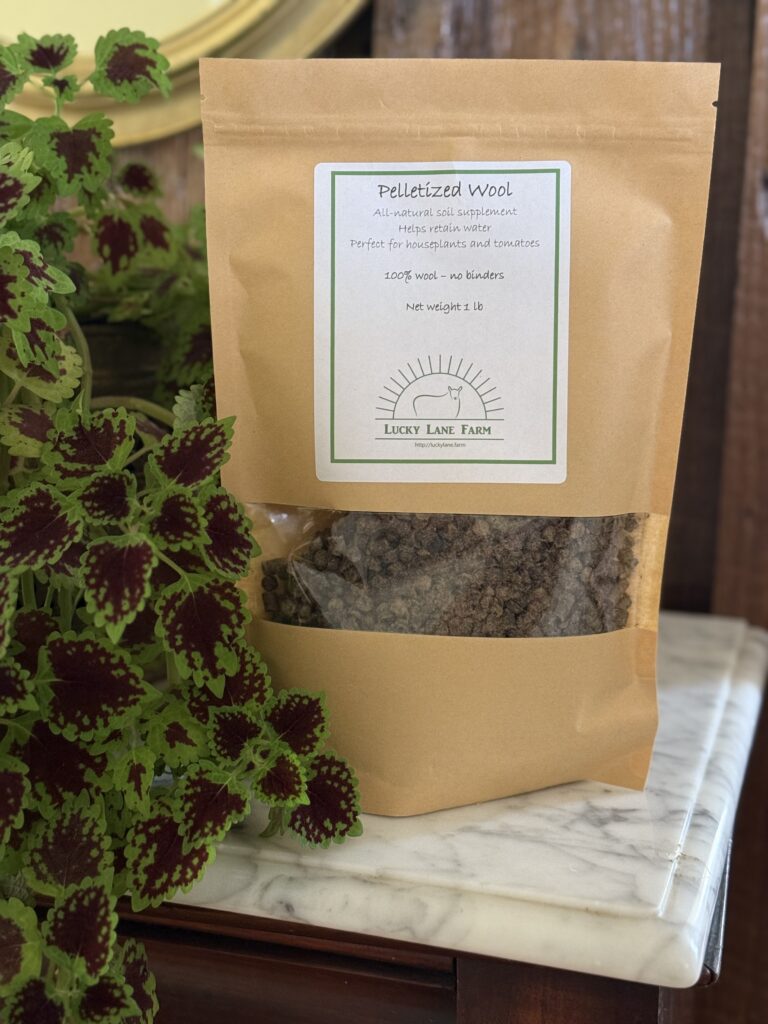
Pelletized wool. Pelletized wool is made with the dirtiest of wool – the dirtier, the better. The wool is shredded and is then heat-sterilized and pelletized.
Pelletized wool is an all-natural additive to soil, mainly helping it retain water. It is thus ideal for growing houseplants that are watered less frequently than optimal. It is an eco-friendly replacement for sphagnum/peat moss (the mining of which is not sustainable and releases carbon to the atmosphere). It also seems to help repel slugs.
Pelletized wool may have especial benefits in growing tomatoes. A study conducted by the University of Vermont – Extension found that the yield of tomatoes could be increased by as much as 86% by incorporating pelletized wool into the soil. Albert Wilde, who has pioneered the use of pelletized wool in horticulture, claims that a study found that greenhouse tomatoes went from seed to fruit in half the time when grown with wool pellets.
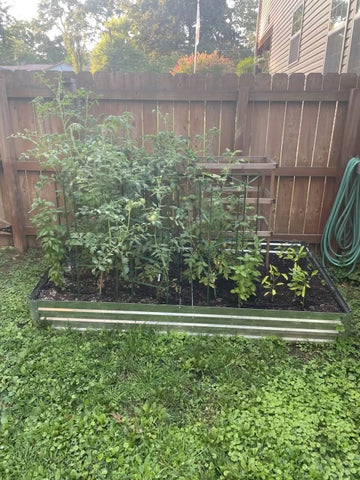
Tomatoes grown with (on the left) and without (on the right) pelletized wool. Image credit: https://krpelletco.com/blogs/news/do-wool-pellets-work-well-with-tomatoes
Tomatoes are not the only vegetable that benefits from pelletized wool; the University of Vermont – Extension found that when pelletized wool was broadcast and then tilled into sandy soil to a 2″ depth, the yield of broccoli increased 3.2-fold for the soil amended with wool pellets compared to broccoli grown without wool pellets. They concluded that pelletized wool represents a viable alternative fertilizer in growing organic vegetables.
Wool pellets have also proven beneficial for growing lettuce. “Since 2010, South America has been experiencing a prolonged megadrought, with a 40% reduction in annual rainfall, further intensified by climate change. This situation has led to a severe decline in water reserves, impacting agriculture and food security. To mitigate these effects, the adoption of sustainable agricultural practices, such as the use of sheep wool as an organic fertilizer, has been explored. [One] study evaluated the impact of wool pellets on lettuce growth and soil properties across different substrates. Lettuce seedlings were cultivated in 1 L pots with various soil types (sand, clay, and peat) and different wool pellet doses: a control group (C), a group with 5 g/L (W5), and one with 10 g/L (W10). Plant growth parameters and soil properties were monitored over a period of 120 days. The addition of wool pellets improved soil moisture retention and chemical properties, with moisture levels increasing by 3% to 25% compared to the control, particularly during dry periods. An increase in nitrate (41-54%) and potassium (10-53%) concentrations was observed in both soil and lettuce leaves (1.4 times) compared to the control, particularly in sandy and clay soils. Lettuce growth was significantly enhanced under the W10 treatment, which showed the highest increases in plant weight (2.5 times), leaf number (1.4 times), and height (1.4 times) compared to the control. Wool pellets may thus serve as an effective tool for optimizing soil management in low-fertility environments, promoting more sustained and resilient plant growth under variable water availability.” (Correa et al, 2025).
In 2025, Baltimore City Master Gardeners tested our wool pellets on several different plants. They were so excited about the results that they presented them at the Maryland State Fair this year. They found:
- Tomatoes planted with wool pellets at the DIG garden at Cylburn Arboretum bloomed earlier, and their tomatoes ripened earlier.
- Tomatoes, tomatillos, and peppers planted with wool pellets at the Eric Waller Community Vegetable Garden flowered earlier, grew faster, and produced more fruit. Cherry tomato plants planted with wool pellets at this location also produced more tomatoes, and produced fruit at least 2 weeks earlier.
- Wool pellets placed around Snow Leopard melons and eggplants had no evidence of slugs or snails.
- Marigolds grown with wool pellets had darker green, healthier looking foliage.
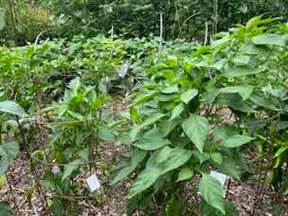
Jimmy Nardello Pepper plants at the Eric Waller Community Garden. The plant on the right was planted with pellets, and the plant on the left was planted without.
In our own vegetable garden, we have found greatly reduced cracking of tomatoes when we switched to growing them with wool pellets.
- To use with potted plants: mix 1/2 C of pelletized wool with 1 gallon (enough for a 10″ pot) of potting mix.
- To use in growing tomatoes: mix 1/4 C of pelletized wool in the soil at the bottom of each hole in which you plant your tomatoes.
- To repel slugs: sprinkle a layer around the base of outdoor plants.
- To use in outdoor gardens or raised beds: work 1 lb per 10 square feet into the soil.
We offer pelletized wool (made with wool from our own sheep) for $12 for a 1-lb bag ($20 for two bags), plus shipping (if required). Please contact us (LuckyLaneFarm@gmail.com) for discounted prices if you wish to purchase some in bulk.
To read more about pelletized wool/wool pellets:
“Exploring Low-Phosphorus Wool Pellets as Fertilizer and Soil Conditioner for Vegetables,” University of Vermont Cooperative Extension. Accessed at https://projects.sare.org/sare_project/one20-358/
“Do Wool Pellets Work Well with Tomatoes?” Accessed at https://krpelletco.com/blogs/news/do-wool-pellets-work-well-with-tomatoes
“4 Reasons to Introduce Wool into Your Garden,” American Wool, 2021. Accessed at https://www.americanwool.org/4-reasons-to-introduce-wool-into-your-garden/
Bradshaw, T.; Hagen, K. 2022. Wool pellets are a viable alternative to commercial fertilizer for organic vegetable production. Agronomy 12(5), 1210. Special issue on Agroecology for Organic Vegetable Systems Redesign. DOI:10.3390/agronomy12051210.
Correa, L. M.; Aguileia, G. C.; Ceruti, M. G., 2025. Effect of wool pellets on soil fertility and lettuce growth in three soil types. J. Aridland Agriculture, v. 11, pp. 44-53.
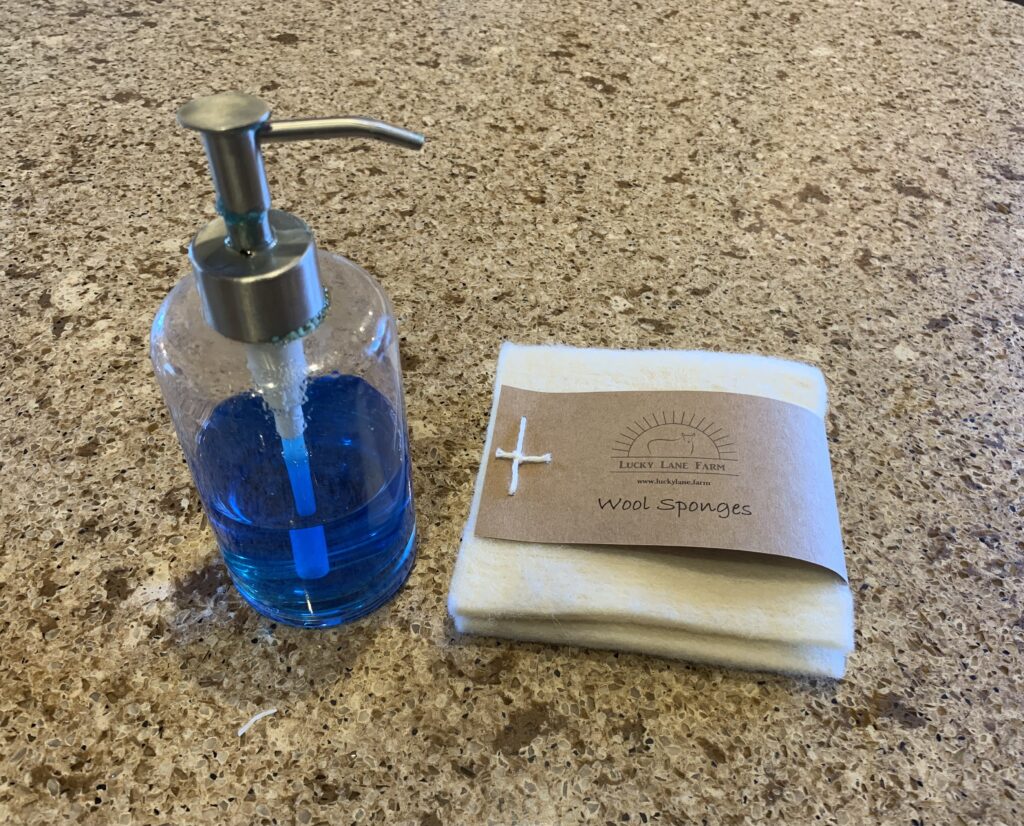
Wool “Sponges”. Are you tired of how nasty and slimy conventional sponges become? Take advantage of the natural antimicrobial properties of wool!
Wool that is too coarse or too short for spinning into high-quality wool can be converted into felt (note: not all wool felts readily!), and then cut into wool “sponges”. These can be used for cleaning dishes, counters, or your body. With continued use and exposure to hot water, they will shrink to the size of a normal sponge and become “scrubbier”. They are safe to use on copper pots and pans as well as on cast iron skillets.
Use as you would a normal sponge. To clean them, wash them in soap and hot water, and squeeze them dry. Alternatively, you can throw them in your dishwasher.
Tests we have done on our wool sponges in which we threw them in a washing machine for an hour with hot water and high agitation revealed that they shrank – but maintained their integrity. These make a great hostess gift if paired with the all-purpose all-natural plant-based multisurface cleaner available from a neighboring lavender farm (well worth the visit!).
Our wool sponges are made using wool from our own sheep; the felting is done for us by a small operation outside Harrisburg, PA, that exclusively employs adults with disabilities.
We offer wool sponges as a package of two (roughly 5″ x 5″) for $10, plus shipping (if required).
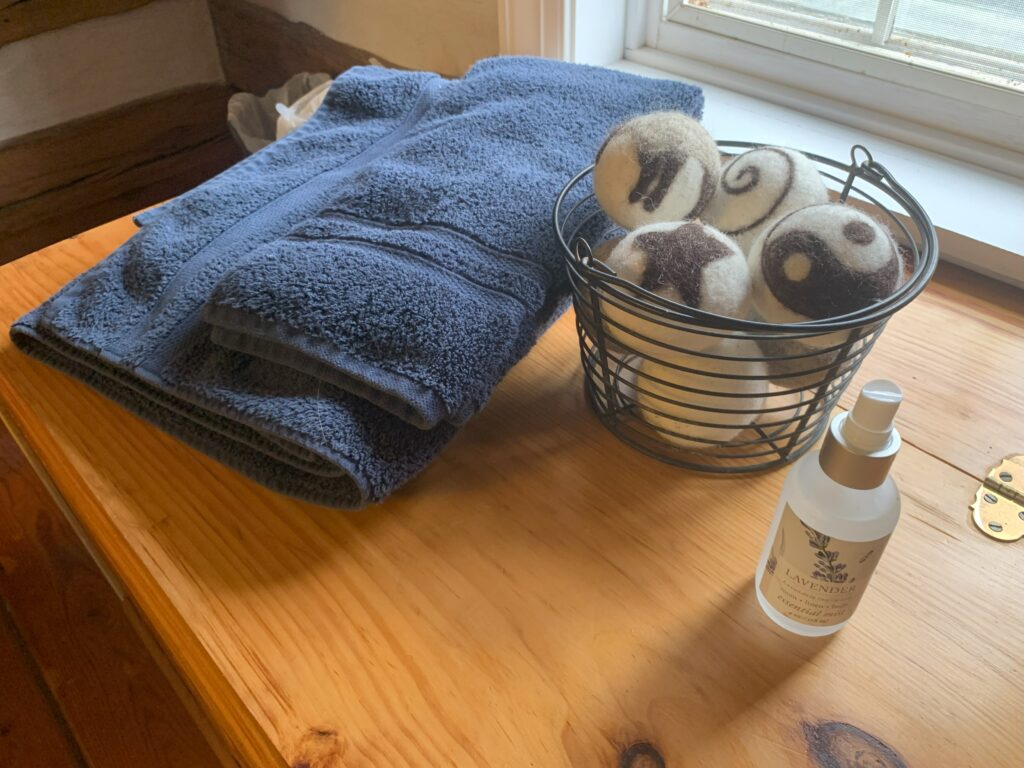
Wool Dryer Balls. These represent an eco-friendly replacement for dryer sheets and fabric softener. Ours are made from undyed wool in all three of the colors that Nature provides (white, gray, and dark brown). You won’t encounter any “bleeding” of dyes onto your damp laundry, or expose your clothing to toxic dyes.
You might be able to find dryer balls at a slightly lower cost online or at Target. Do consider that they were almost certainly shipped from the other side of the globe (so factor their transport into their carbon footprint). Moreover, many are not 100% wool, but contain a “core” of synthetic materials.
Benefits:
- According to the Department of Energy, dryer balls significantly reduce the time required to dry laundry, in part by absorbing water but also by eliminating pockets of moisture. This is an important consideration, as dryers are among the costliest of household appliances to operate.
- Dryer balls also reduce static cling, eliminating the need for dryer sheets.
- They attract animal hair that might be present on your clothing.
- They soften clothes and reduce wrinkles by increasing air circulation, reducing friction between your clothes.
- Won’t shed microplastics to the environment.
- Should last for 1000 or more loads if properly cared for.
We offer dryer balls as both plain (in white or gray), or hand-decorated forms (five designs available: dark brown stars on white balls, white stars on gray balls, dark brown “yin and yang” symbols on white balls, dark brown spirals on white balls, or dark brown and gray sheep on white balls. The decorated balls make wonderful hostess gifts, especially if paired with some of the lavender essential oil mist available at a lavender farm near us (well worth the visit!). Our price is $20 for 4 plain balls, or $30 for 3 decorated balls (plus shipping, if needed).
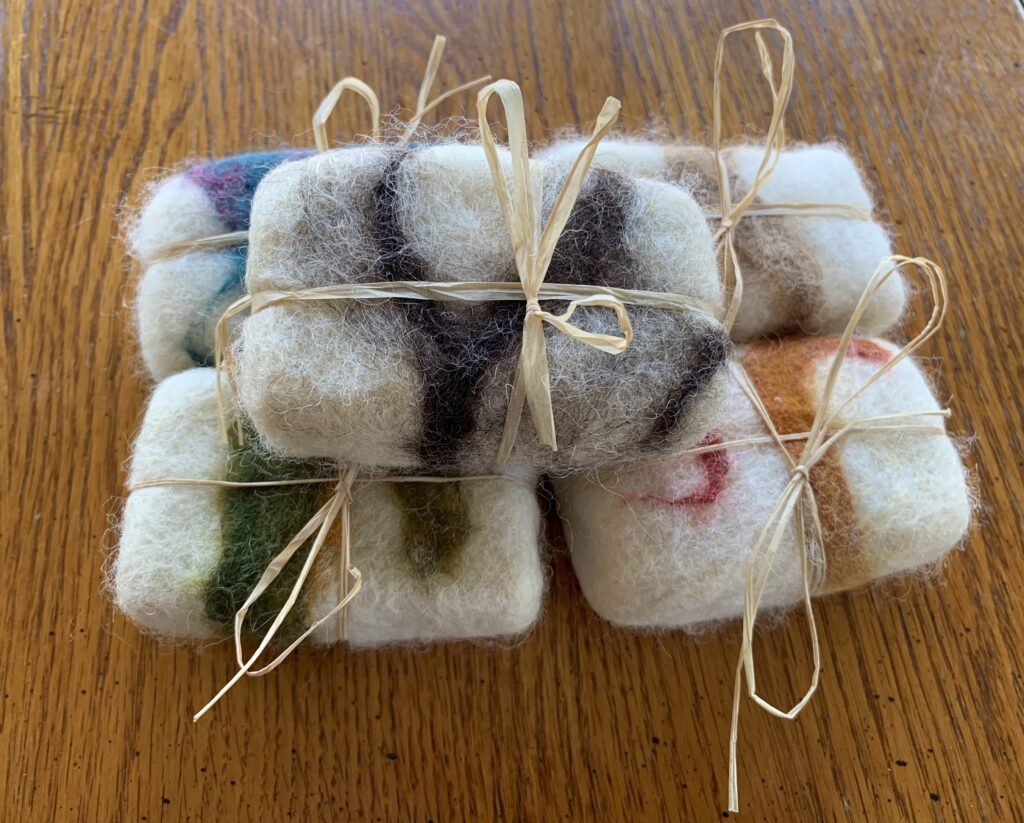
Felted Goat’s Milk Soaps. These represent an eco-friendly alternative to conventional soap. Not only are they free from petroleum products – but they also last far longer than conventional soaps and, of course, don’t shed microplastics. Think of felted soap as possessing a built-in washcloth – one that (thanks to the antimicrobial properties of wool) does not get slimy or stinky. The felt acts as a natural exfoliant on your skin; it also helps the soap dry faster (contributing to the much longer life of the soap). Once the soap is exhausted, you can use the felt as a “scrubbie”, or cut a small slit in it and insert a replacement bar of soap.
Our goats milk soaps are made using all natural ingredients by a small goat dairy farm in Lancaster County, PA; we hand-felt each one using mainly or entirely undyed wool from our sheep. In the case of the scented soaps, we add small amounts of dyed wool roving purchased from local fiber artists at the Maryland Sheep and Wool Festival. Available scents include: unscented (in undyed wool); lavender; citrus; aloe; and mint. Prices are $10 per bar of soap.
Please contact us if you need additional information on any of these products, or to schedule a visit to our farm to pick some up (and to see our lambs!).
Small Batch Gourmet Jams and Salsas
If you’ve never made jam, you might not be aware that typical recipes require as much as a 1:1 ratio of fruit to sugar. That’s because conventional (apple-based) pectin actually requires sugar to jell. (Other sweeteners, such as honey, can’t be substituted). In contrast, our jams use a citrus-based pectin that doesn’t require sugar. We add only enough local raw honey or Vermont maple syrup to complement the flavor of the fruit. So an 8-ounce jar of our jam may only contain 1-3 tablespoons of honey or maple syrup. Salsas contain only ~ 0.1 tablespoon of honey per jar, if that.
We use organic fruit wherever possible, much of it from our own farm. (Peaches and some citrus, as well as bell and jalapeno peppers, onions, and ginger root, are not organic). Strawberries, blueberries, sour cherries, and rhubarb are all organic. Some of these jams contain only four ingredients: fruit, honey, lemon juice, and pectin.
Available flavors include: roasted strawberry-rhubarb jam, strawberry-honey jam, sour cherry jam, blueberry-rhubarb-maple-honey jam, blueberry-honey-lemon jam, peach-ginger jam, maple-vanilla-peach jam, peach-citrus marmalade, peach-cinnamon butter, spicy tomato jam, tomato-basil jam, and peach-jalapeno salsa. More flavors are to come: roasted peach-cardamom jam and roasted strawberry-balsamic jam. Toward the holiday season, we will turn our attention to making Christmas jam.
They’ve all been canned using proper hot water canning technique, and are all shelf-stable (best used within 1 year). Once opened, they should be refrigerated and used within three weeks; sugar (which they lack) acts as a preservative.
Our jams and salsa were well-received at the MD State Fair this year, earning two blue ribbons, two second-place ribbons, and three third-place ribbons, from among a large group of competitors.
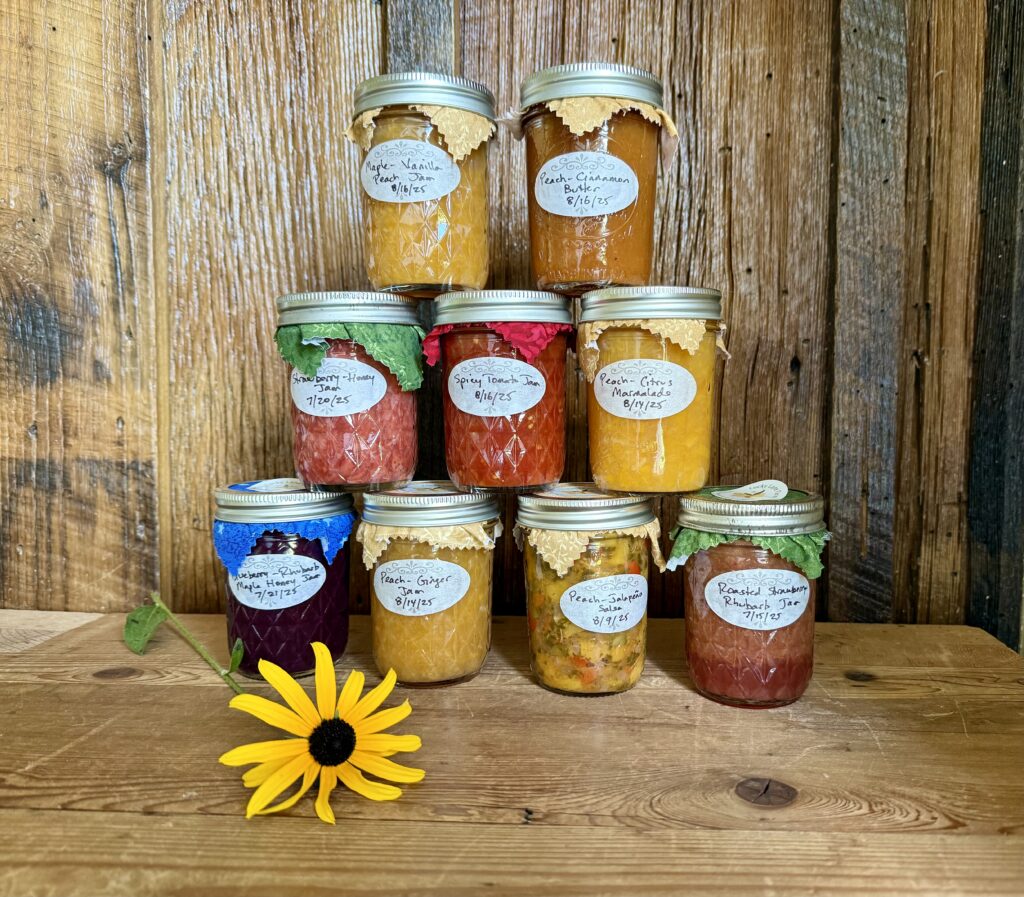
A selection of our jams and salsas.
Price: $10 per jar